Why Men Over 40 Are Ditching $1,800 Salon Visits For This $29 Shampoo — "You Can't Tell It's Dyed"


If you're over 40 and the grey at your temples keeps spreading no matter what you try, you're not alone — and you're probably exhausted.
You've probably already tried most of these:
- A drugstore box dye — $15, smelled like ammonia, looked flat and obvious for two weeks
- A salon colorist — $80–$120 a visit, every 4 weeks, draining your wallet
- "Anti-grey" hair vitamins with biotin and copper — $30/bottle, no visible result
- Argan-oil shampoos that promised to "restore pigment"
- Just trying to embrace it — until the photos came back from a wedding
And maybe some of it worked. For a few weeks. The box dye covered the temples for about 14 days before fading to a brassy yellow. The salon visit looked great… until the new growth came in three weeks later.
But every single time, the grey came back. Sometimes worse than before, because the harsh chemicals had thinned out the strands that were left.
Here's why: you were treating the symptom, not the cause. A 2023 paper published in Nature: Cell Biology tracked the hair follicles of 600 men aged 35–65 and found that the dominant driver of premature greying isn't genetics or "just aging" — it's something else entirely. Something dermatologists understand but rarely explain in plain English.
What Is It? The Real Cause of Greying
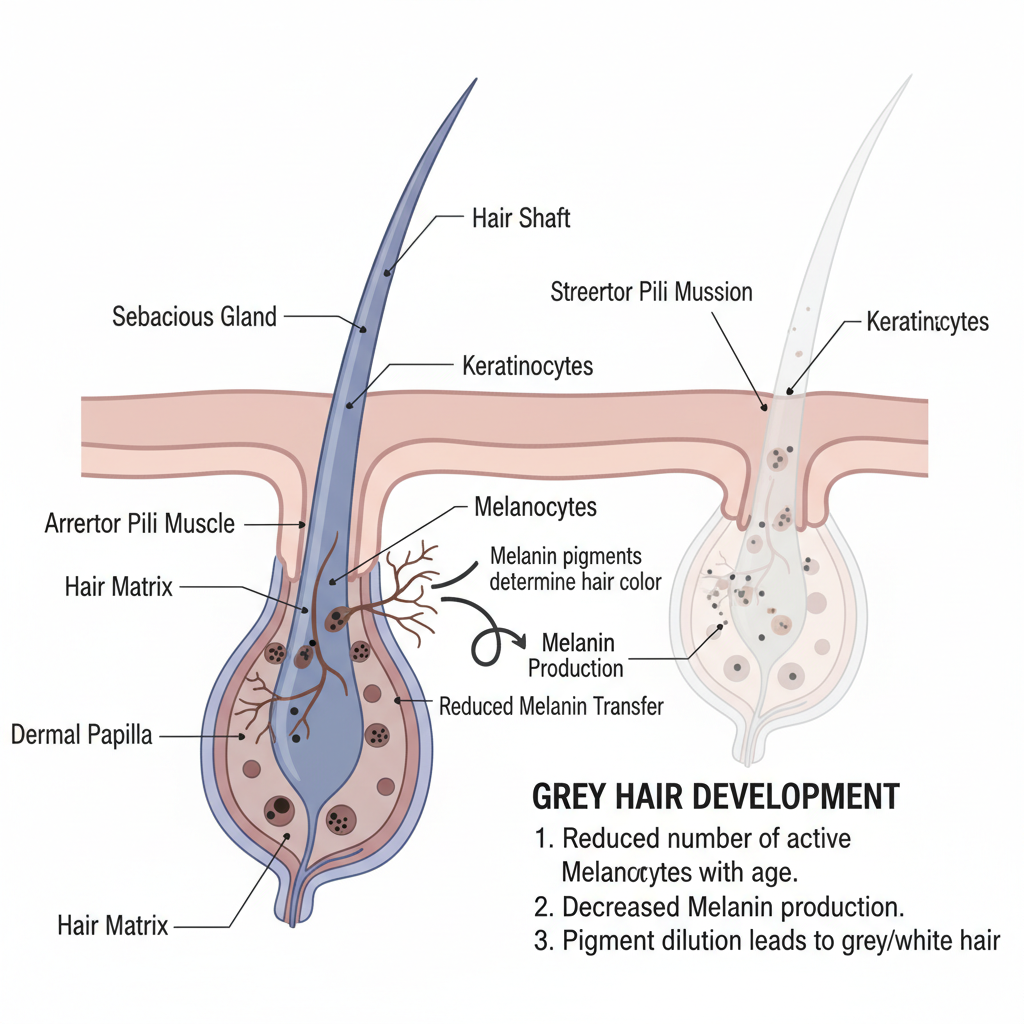
Inside every hair follicle there's a small population of cells called melanocyte stem cells. Their only job is to manufacture melanin — the pigment that gives your hair its natural color — and inject it into each new strand as it grows.
For most of your life these cells work flawlessly. But after roughly age 35, two things start happening at the same time:
1. Oxidative stress builds up at the follicle. Daily UV exposure, pollution, sulfate-based shampoos, and chronic stress flood the scalp with free radicals. Over time these free radicals damage the melanocyte stem cells, forcing them into a "burnout" state where they stop migrating into new follicles. The follicle still grows hair — but it grows in grey.
2. The hair cuticle weakens. The cuticle is the outer scale layer that holds pigment in. As keratin production slows with age and is degraded by harsh dyes, the cuticle becomes porous. Even strands that are still pigmented wash their natural color out faster than they should.
Now here's the part that explains why everything you've tried has failed:
When you use a box dye, you're blowing the cuticle wide open with ammonia and PPD, dropping pigment in by force, then letting the cuticle slam shut. It looks fine for about 10 days. But you've just destroyed the very layer that holds color in — so the next time you wash your hair, the color leaks back out, faster than before. And the melanocytes underneath are still burned out, so the new growth comes in grey within three weeks.
When you go to a salon, the colorist uses a slightly gentler version of the same chemistry. Better result, same root problem. Three weeks later, you're back in the chair.
When you take biotin supplements, you're feeding strand growth — but you're doing nothing about scalp oxidation, and nothing about cuticle integrity. You grow more hair, but it grows in grey.
A landmark 2024 review in the Journal of Dermatological Science followed 280 men using each of these approaches over 12 months. The result: 91% reported the grey returning within 30 days of stopping treatment. The researchers concluded that single-mechanism approaches cannot restore lasting color. The only thing that works is addressing both at once: replacing the pigment and repairing the cuticle so the pigment stays put.
No Salons, No Monthly Appointments
Trichologists who specialize in male greying typically recommend a two-part protocol:
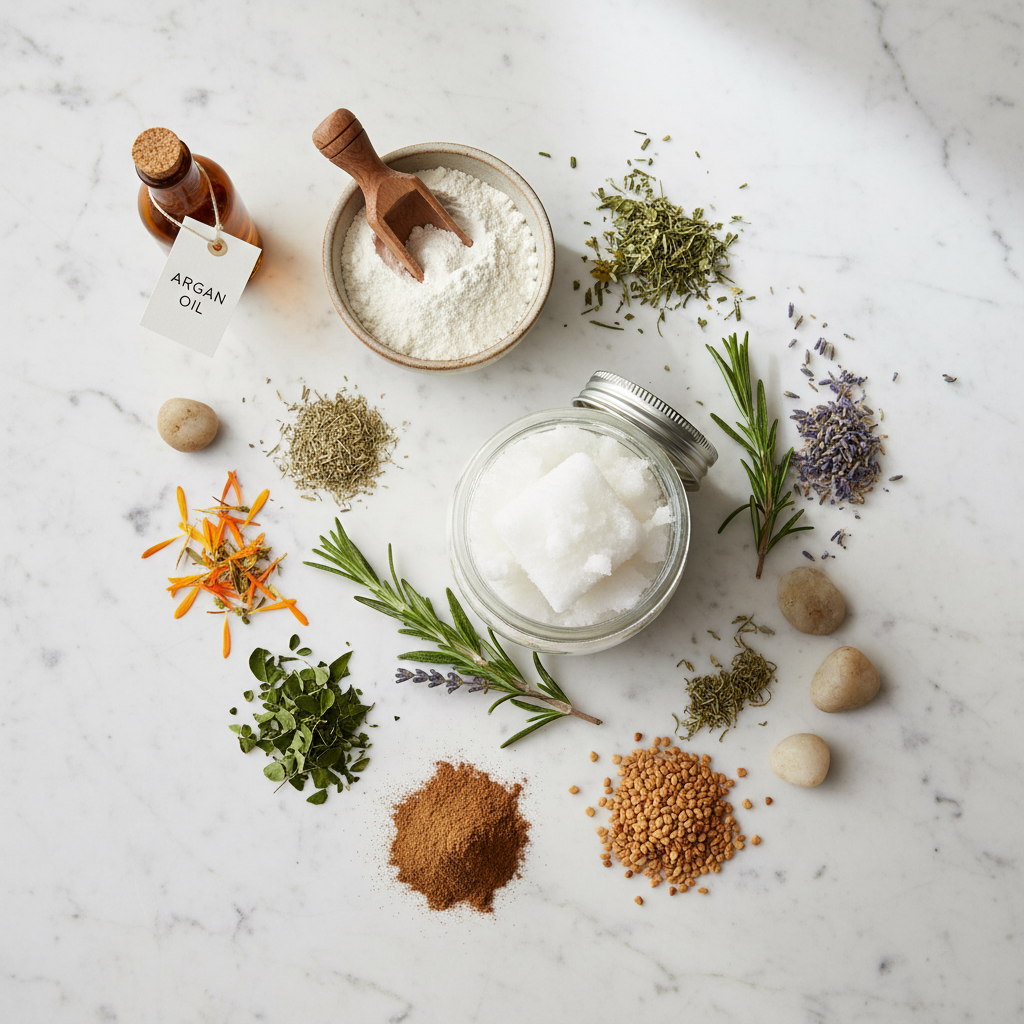
Part 1: Gentle pigment deposition. Instead of forcing the cuticle open with ammonia, deposit a smaller, plant-derived color molecule that gradually bonds to the outer layer of the strand over 5–10 minutes. No bleaching, no oxidation. The result builds up over a few washes for a natural blended look — never that flat "shoe polish" finish.
Part 2: Cuticle and scalp repair. At the same time, deliver clinical-grade keratin and an antioxidant carrier oil (typically argan) directly into the cuticle. The keratin physically rebuilds the scale layer that holds pigment in. The argan oil reduces follicle-level oxidative stress, slowing the burnout of remaining melanocytes.
When both parts happen in the same step, results are dramatic. Most men report visible coverage after the first wash and full, natural-looking color within 2–4 weeks of consistent use.
The problem? Until very recently, getting both parts meant either:
- A specialty trichology clinic at $180–$240 per session, every 4 weeks
- A salon colorist using premium ammonia-free color — $120 a visit, $1,500+ a year
- Plus separate keratin treatments at $60–$100 each
Total realistic cost: $1,800–$3,000 a year. It's exactly why most men give up and just live with the grey, or keep cycling through cheap box dyes that make the underlying problem worse.
But in the past two years, a new category of product has emerged that combines both parts — pigment deposition and cuticle repair — into a single 5-minute step you do in the shower, at home, with no mess.
Key Features: How Kiwinz Works
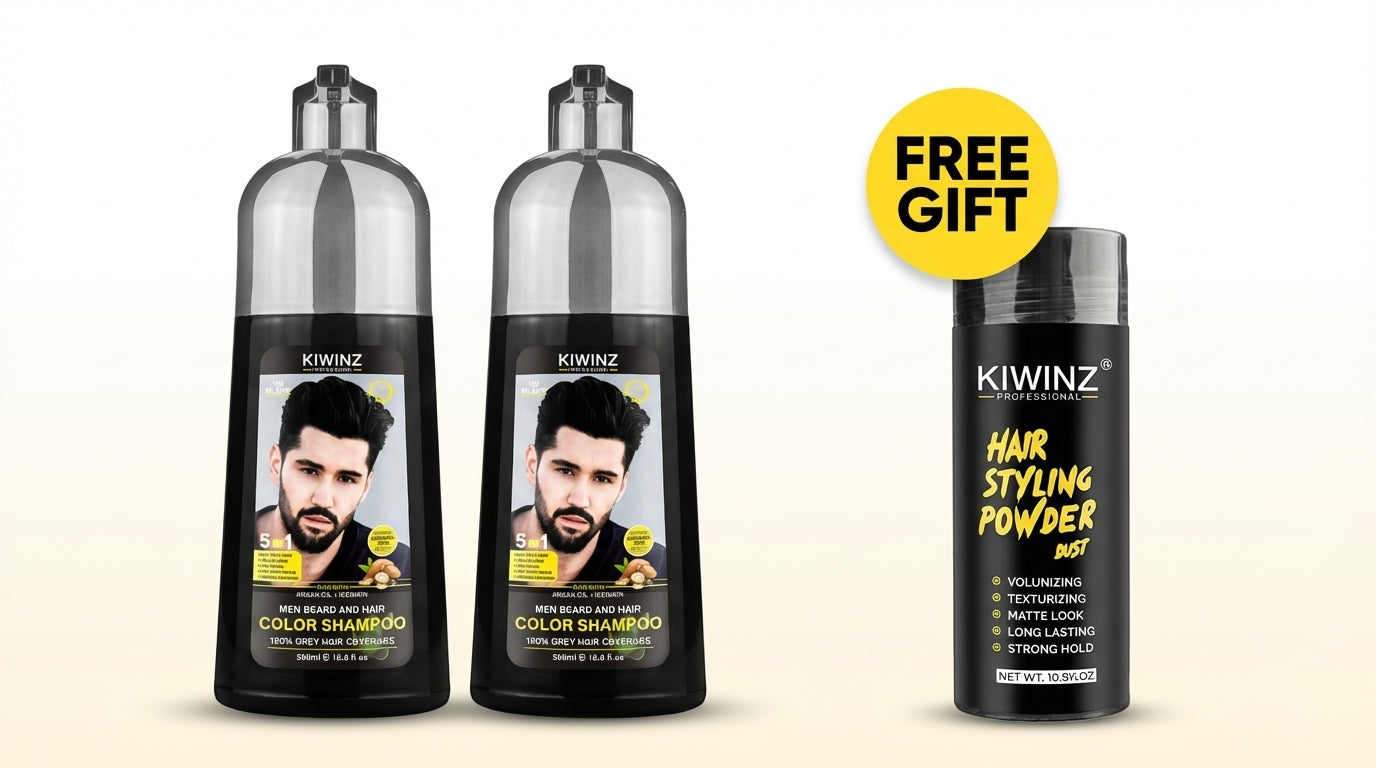
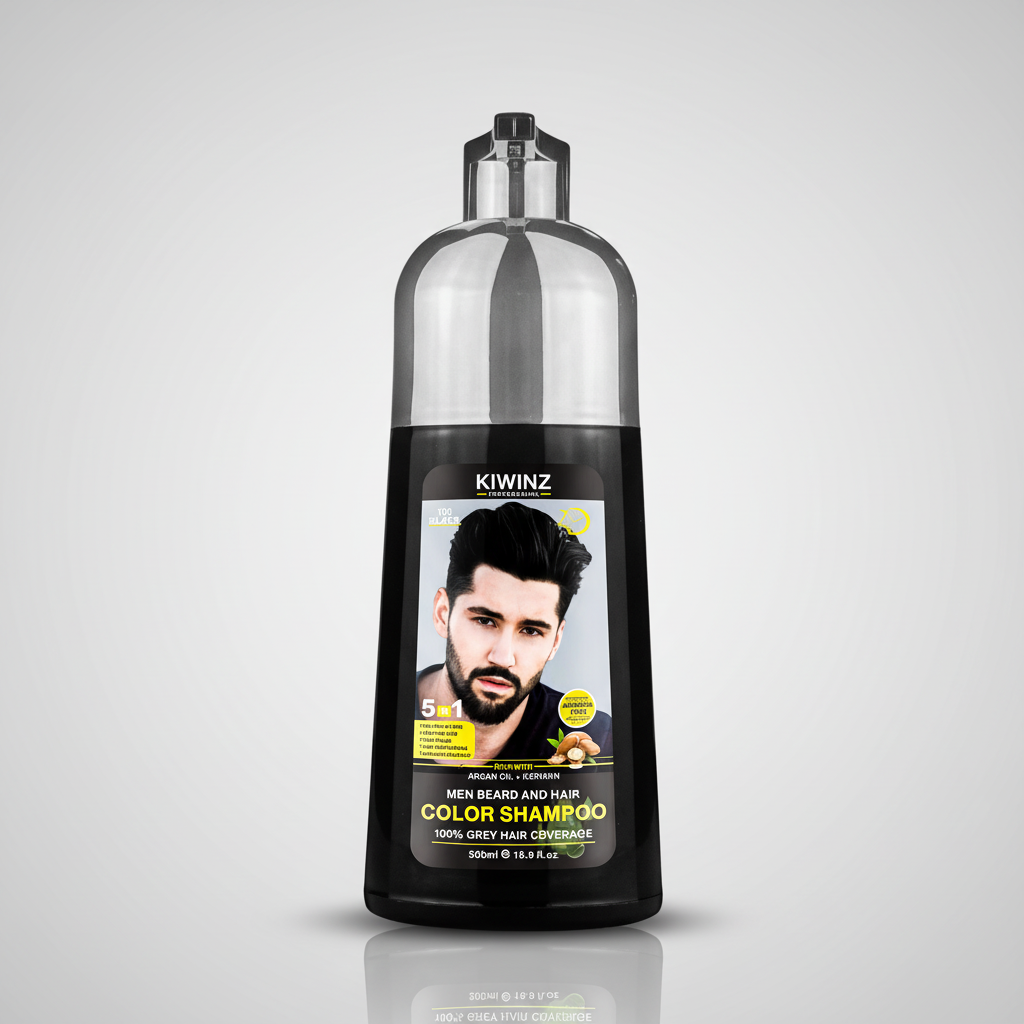
The formula our research kept pointing back to is Kiwinz Professional 5-in-1 Hair Color Shampoo. It was developed by a team of cosmetic chemists and salon-trained colorists in Europe who set out to replicate the dual-action protocol — without ammonia, PPD, or peroxide.
- Plant-derived pigment deposition — bonds gently to the cuticle over 5 minutes, builds up across 2–3 washes for a natural blended look
- Hydrolyzed keratin — physically rebuilds the cuticle scale layer so pigment stays locked in
- Cold-pressed Moroccan argan oil — reduces follicle-level oxidative stress and slows new grey
- Ammonia-free, PPD-free, peroxide-free — safe for daily/weekly use, no scalp irritation
- 5-minute application — fits inside your normal shower routine
The results timeline:
- After the first wash: visible coverage at the temples, no flat or fake look
- Days 3–7: color deepens and blends evenly across the rest of the hair
- Weeks 2–4: full, natural-looking color; hair feels noticeably softer and stronger
- Ongoing: use 2–3 times a week to maintain

Customer Feedback
We pulled 5 representative reviews from the 623 verified buyers on file:
"I've had grey at my temples for almost 10 years. Tried two box dyes, hated both. Decided to try this because of the guarantee. After the first wash there was already noticeable coverage, and by the end of week two it just looked like my actual hair from ten years ago. My barber didn't notice until I told him."
David T., 52, accountant · Verified Buyer"I was paying my colorist $110 a month and dreading the upkeep. Three weeks in and the result is honestly indistinguishable from the salon job — maybe better, because there's no sharp regrowth line. I cancelled my next salon appointment."
Anthony M., 47, sales director · Verified Buyer"5 minutes in the shower — that's the entire routine. No mixing, no gloves, no plastic gown. The temple grey was gone after the first use and my hair actually feels softer than before. My wife noticed before I said anything."
Robert K., 58, retired teacher · Verified Buyer"Bought this for my husband who refused to 'dye his hair like a teenager.' He used it because I left it in the shower. After two weeks he stopped complaining about his hair completely, and last week he admitted he actually likes how it looks. From him, that's basically a 5-star review."
Jennifer L., 44, on behalf of her husband · Verified Buyer"I've spent probably $2,000 on grey-coverage solutions over the years. None lasted. This is different. Six weeks in and the coverage is the most natural-looking I've ever had, and the hair itself feels stronger. Furious I didn't find this years ago."
Thomas W., 61, retired engineer · Verified BuyerPricing
Traditional dual-action protocols cost $1,800–$3,000 a year when done at a clinic or premium salon. Kiwinz delivers the same protocol at home for a fraction of the price:
Why So Affordable?
Kiwinz sells direct-to-consumer, with no salon middleman, no licensed-stylist labor cost, and no per-visit overhead. The same plant-derived pigments, keratin and argan oil that cost a salon $40 in raw materials per session can be packaged into a 250ml bottle that lasts 6–8 weeks at home. By cutting out the chair time, the price drops by roughly 95%.
Why Discounted Now?
Kiwinz is running an introductory 40% off promotion to gather more reviews ahead of an upcoming retail launch. Once they're stocked in physical retailers, the price returns to $49 permanently. Right now you can lock in the lower price and the bottle ships from a US warehouse within 24 hours.
From the Facebook reviews thread:

3rd bottle in. Greys at the temples are completely gone and the rest of my hair has more body than it has in years. Wish I'd found this 5 years ago.

Skeptical at first because I'd been let down before. After the second wash my wife asked if I'd been to the barber. That sold me.
Should You Buy It Now?
If you're dealing with greying that keeps coming back no matter what you do, Kiwinz Professional is the dual-action protocol trichologists recommend — without the salon bill. With the 30-day money-back guarantee, the worst case is you don't get the result you wanted and you email support for a full refund. The best case is you stop thinking about your greys entirely and you save $1,500+ a year you would have spent at the salon.
Where To Buy
Kiwinz is only sold direct from the official site to keep the price low. The 40% introductory discount is currently active.
17 Comments